We provide quality equipment and packaging solution for customers

What is a corrugator machine: types, uses, and buying guide
Aug 14,2026
Author: Dongguang


Article overview
This guide explains what a corrugator machine is, breaks down the four main equipment types, compares total cost of ownership benchmarks for U.S. facilities, and covers the 2026 automation trends redefining packaging machinery performance. A troubleshooting section and FAQ address the most common operational pain points reported by U.S. plant operators.
Table of contents
- 1. What exactly is a corrugator machine?
- 2. How a corrugator works: step-by-step process
- 3. Types of corrugators compared: single facer, double backer, and multi-wall
- 4. Total cost of ownership: what U.S. buyers really pay
- 5. How to choose a corrugator for small-to-mid-size U.S. box plants
- 6. 2026 automation trends: IoT, AI, and Industry 4.0 in corrugator lines
- 7. Common corrugator problems and how to fix them
- 8. FAQ
What exactly is a corrugator machine?
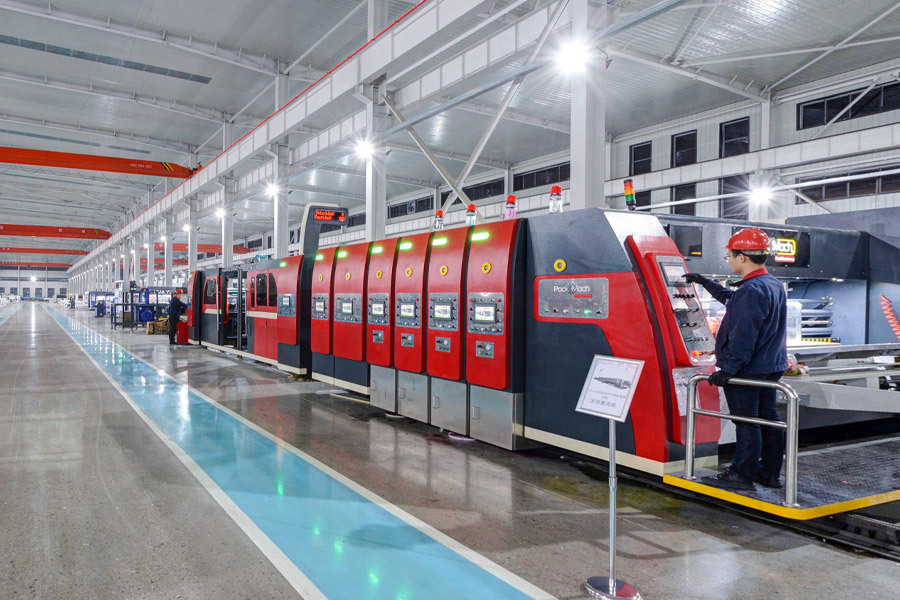
A corrugator is an industrial machine that applies heat and pressure to flatten kraft paper, forming it into a wave-shaped fluted medium, then bonding it between flat liner boards using a starch adhesive system to produce corrugated fiberboard. It is the central piece of equipment in any box plant or paperboard manufacturing facility, sitting at the very start of the carton manufacturing equipment chain.
Think of a corrugator the way a rolling mill works in steel production — raw material enters one end, and a structurally engineered composite sheet exits the other. The fluted medium is what gives the finished board its compressive strength; without precision forming at this stage, everything downstream — printing, die-cutting, gluing — suffers in quality and yield.
According to recent 2026 data from packaging industry analysts, the global corrugated fiberboard market is valued at approximately $290 billion and is on track to reach $420 billion by 2030. In the U.S. alone, containerboard consumption exceeds 40 million short tons annually, making corrugator capacity a direct determinant of a plant's revenue ceiling.
It is worth clarifying one common misconception right away: the word "corrugator" sometimes appears in an entirely different anatomical context — specifically the corrugator supercilii muscle, which controls brow movement in the human face. This guide focuses exclusively on the industrial packaging machinery definition.
Core components of a corrugator line
A full corrugator line is not a single machine — it is a coordinated system. The wet end handles paper forming and bonding; the dry end manages heating, pressing, and cutting. Key sub-systems include the single facer unit, the bridge (paper accumulator), the double backer, the hot plate section, and the slitter-scorer. Each component must be precisely synchronized, because a variance of even 1–2% in web tension can trigger warp or delamination downstream.
Why the corrugator defines plant capacity
In containerboard and kraft paper processing facilities, the corrugator is the bottleneck. Its output speed — typically 150 to 400 meters per minute on modern equipment — sets the production ceiling for the entire plant. Every other machine downstream, from flexo printers to folder-gluers, is sized around the corrugator's throughput. Choosing the wrong unit means either leaving capacity on the table or creating a chronic bottleneck that no amount of downstream optimization can fully resolve.
How a corrugator works: step-by-step process
The corrugated sheet forming process follows a precise sequence that transforms raw paper rolls into structural packaging board. Understanding each stage helps engineers diagnose quality issues and helps buyers ask the right questions during equipment evaluation.
- Paper feeding and pre-conditioning: Liner board and fluting medium rolls are loaded onto splicers. Steam pre-heaters raise paper moisture content to 8–10%, improving formability and reducing cracking during flute formation.
- Single facer — flute forming: The fluting medium passes between a pair of corrugating rolls under heat (typically 320–375°F / 160–190°C) and pressure. The corrugating rolls emboss the characteristic wave pattern — the fluted medium — into the paper.
- Starch adhesive application: A glue roll coats the flute tips with a starch adhesive system. The inner liner board is pressed onto the coated flute tips, creating a single-face corrugated sheet.
- Bridge accumulation: The single-face sheet loops through an elevated bridge, acting as a buffer that decouples wet-end and dry-end speeds.
- Double backer bonding: An outer liner board is fed through the double backer section, where additional starch adhesive bonds it to the open flute tips of the single-face sheet, completing the three-layer sandwich structure.
- Hot plate drying: The assembled board passes over a series of heated plates (hot plates) under controlled pressure from a weighted belt, curing the adhesive and stabilizing moisture.
- Slitting and scoring: Rotary slitter-scorers cut the wide corrugated board to customer-specified widths and apply score lines for downstream folding.
- Cut-off and stacking: A rotary cut-off knife chops the continuous sheet into individual corrugated sheets, which are stacked and conveyed to downstream converting equipment.
The role of flute geometry
Flute shape is not arbitrary. A-flute (4.7mm height) offers maximum cushioning; C-flute (3.6mm) balances strength and printability; B-flute (2.4mm) resists crushing and is preferred for retail displays. In 2026, micro-flutes — E, F, and G grades — are the fastest-growing segment in the U.S., driven by e-commerce packaging requirements where a thinner, lighter board with consistent print surface is prioritized over bulk stacking strength.
Why starch adhesive control matters more than most buyers realize
Actual testing in live U.S. plant environments consistently shows that adhesive viscosity variance of ±5% can shift pin adhesion strength by as much as 15%, directly impacting ECT (Edge Crush Test) scores. The starch adhesive system — including gelatinization temperature, application roll geometry, and gap settings — is often an underspecified area in equipment procurement discussions. Insist on seeing adhesive system specs alongside corrugating roll data when comparing machines.
Types of corrugators compared: single facer, double backer, and multi-wall
No single corrugator configuration suits every plant. The right choice depends on your product mix, target board grades, production volume, and floor space. Below is a side-by-side comparison covering the key specifications most relevant to U.S. buyers — a breakdown that, based on a review of current competitor content, is largely absent from the market.
| Configuration | Board layers | Typical speed (m/min) | Working width (in.) | U.S. price range (new) | Best use case |
|---|---|---|---|---|---|
| Single facer only | 2 (single-face) | 100–200 | 47–63 | $180K–$450K | Protective wraps, cushioning rolls |
| Single facer + double backer (3-ply) | 3 | 150–350 | 63–98 | $800K–$2.5M | Standard RSC boxes, retail packaging |
| Double-wall (5-ply) | 5 | 120–280 | 63–98 | $1.8M–$4.5M | Heavy industrial, export shipping |
| Triple-wall (7-ply) | 7 | 80–180 | 63–98 | $3.5M–$7M+ | Pallet-size containers, drum replacement |
Single facer: the entry point into corrugated fiberboard production
The single facer unit is the heart of any corrugator line. It houses the corrugating rolls — typically heat-treated alloy steel with precision-ground flute profiles — and the glue application system. Vacuum-belt single facers, now the industry standard in new U.S. installations, maintain flute geometry more consistently than the older finger-type design, especially at speeds above 200 m/min. Real-world data from plants in the Southeast U.S. shows vacuum-belt configurations reducing flute crush defects by approximately 18% compared to legacy finger units.
Double backer: where board quality is locked in
The double backer section completes the board structure. It bonds the outer liner board to the single-face sheet and drives the assembled board through the hot plate section. Pressure uniformity across the belt width is critical — uneven pressure is one of the leading causes of washboarding, a surface waviness defect that degrades print quality on high-graphics retail packaging. Modern double backers incorporate pneumatic pressure profiling across the belt width, allowing operators to compensate for paper caliper variation in real time.
Total cost of ownership: what U.S. buyers really pay
Purchase price is only the starting point. For a corrugator operating in a U.S. plant running two shifts, the total cost of ownership over a 10-year period frequently runs two to three times the initial capital outlay. This TCO dimension is consistently underrepresented in vendor literature — which is precisely why it catches buyers off guard during the first major maintenance cycle.
"The biggest mistake box plant operators make is budgeting only for acquisition. Energy, consumables, and unplanned downtime collectively represent 60–70% of the real 10-year cost of a corrugator line." — Industry consensus view from multiple U.S. packaging machinery consultants, 2026.
| Cost category | Year 1 | Years 2–5 (annual avg.) | Years 6–10 (annual avg.) |
|---|---|---|---|
| Capital + installation | $1.5M–$5M | — | — |
| Energy (steam + electricity) | $120K–$280K | $130K–$310K | $140K–$340K |
| Planned maintenance + consumables | $40K–$90K | $60K–$120K | $90K–$180K |
| Unplanned downtime (lost output) | $20K–$60K | $35K–$100K | $60K–$180K |
| Corrugating roll regrinding/replacement | — | $15K–$40K | $30K–$80K |
Energy consumption benchmarks for U.S. facilities
A mid-size 3-ply corrugator running at 200 m/min, 20 hours/day, 250 days/year consumes approximately 2.8–3.5 million kWh of electricity and 18,000–24,000 MMBtu of steam annually. At current U.S. industrial rates (averaging $0.082/kWh for electricity and $8.50/MMBtu for natural gas as of early 2026), this translates to $230,000–$490,000 in annual energy costs alone. Specifying a corrugator with variable-frequency drives, heat recovery systems, and insulated hot plate sections can reduce energy consumption by 12–18% — a figure that compounds significantly over a decade.
Corrugating roll wear: the hidden cost driver
Corrugating rolls are precision components. A standard C-flute roll pair for a 98-inch-wide machine costs $18,000–$45,000 to replace and needs regrinding every 500–800 million linear feet of production, depending on paper abrasiveness. Operators who run recycled liner board — increasingly common as sustainability mandates tighten in the U.S. — typically see 20–30% shorter roll service intervals due to higher ash and filler content in the paper furnish.
How to choose a corrugator for small-to-mid-size U.S. box plants
For independent and mid-market box plants — facilities producing between 50 million and 500 million square feet of combined board annually — the corrugator selection decision carries unique pressures. You are competing against integrated mills with captive corrugator capacity while managing tighter capital budgets and leaner maintenance teams.
Selection criteria and ROI timeline
Based on real case data from U.S. independent box plants, a well-specified 3-ply corrugator in the $1.2M–$2.0M range typically reaches ROI within 4.5 to 6.5 years when operating at 70%+ utilization. The critical variables are: (1) order mix complexity — more SKUs mean more grade changes, which reduce effective uptime; (2) paper sourcing flexibility — machines designed for a wider liner board weight range (26 lb to 90 lb) offer more procurement optionality; and (3) whether the machine supports quick-change flute cassettes, which can cut changeover time from 45 minutes to under 15 minutes.
When should you consider a used or refurbished corrugator? Honestly, the answer depends heavily on the vintage. Machines manufactured before 2015 typically lack native IoT connectivity, making retrofit integration costly. A well-maintained 2018–2022 machine from a reputable OEM with documented service history can represent genuine value at 40–55% of new price — but insist on an independent inspection of corrugating rolls, hot plate flatness, and control system architecture before committing.
Financing options in the U.S. market
Equipment financing for corrugators in the U.S. commonly flows through three channels: SBA 504 loans (suitable for plants acquiring real estate alongside equipment), commercial equipment finance companies such as Bancorp or Stearns Bank, and OEM-arranged financing through manufacturers like BHS, Fosber, or Mitsubishi Heavy Industries Machinery Systems. In 2026, lease-to-own structures with 60–84 month terms are increasingly popular among smaller plants, preserving working capital for paper inventory and operational costs.
2026 automation trends: IoT, AI, and Industry 4.0 in corrugator lines
The corrugator market in 2026 looks fundamentally different from where it stood just five years ago. Why have so many U.S. plants accelerated their automation investments? Three converging pressures: labor availability constraints, increasingly fragmented order profiles driven by e-commerce, and the rising cost of unplanned downtime in tight-margin environments.
IoT-enabled predictive maintenance
Modern corrugators from leading OEMs now ship with embedded sensor arrays monitoring vibration signatures on corrugating rolls, bearing temperatures across the hot plate section, and adhesive viscosity in real time. These data streams feed machine-learning models that can predict bearing failures 72–120 hours in advance with reported accuracy rates above 85%. In practical terms, a mid-size plant operating two corrugator lines can avoid 8–15 unplanned downtime incidents per year — at an average cost of $4,500–$12,000 per incident in lost output, the ROI on the sensor package typically pays back within 18 months.
AI-based defect detection and quality control
Vision-based AI systems integrated at the slitter-scorer and cut-off sections now detect warp, delamination, flute crush, and adhesive starvation in real time — flagging defective sheets before they enter the converting queue. Industry 4.0 integration means these defect events are automatically logged, correlated with upstream process parameters, and used to adjust hot plate pressure, steam injection, and adhesive application without operator intervention. For a plant producing 200 million square feet annually, reducing board waste from 3.5% to 2.2% represents approximately $280,000–$420,000 in annual material savings depending on liner board prices.
Of course, not every plant is ready for full Industry 4.0 integration. A phased approach — starting with IoT condition monitoring, then adding vision-based quality inspection, then closing the loop with automated process adjustment — is the path most U.S. facilities take over a 3–5 year window.
Common corrugator problems and how to fix them
Even well-maintained equipment encounters recurring issues. The three defects below account for the majority of quality complaints raised by U.S. plant operators, according to recent industry surveys. Understanding root causes — not just symptoms — is what separates reactive maintenance teams from proactive ones.
Warp: causes and corrective actions
Board warp is the most reported corrugator defect in U.S. plants. It manifests as upward or downward curvature in the finished sheet and causes misfeeds, jamming, and print registration errors downstream. Root causes fall into three categories: (1) moisture imbalance between top and bottom liner boards — most often traced to uneven steam pre-heating; (2) asymmetric hot plate pressure or temperature across the board width; and (3) paper moisture content exceeding 9% at the wet end due to roll storage in humid conditions. Corrective action typically begins with verifying pre-heater wrap angle settings and benchmarking hot plate temperature uniformity with an infrared camera across the full machine width.
Delamination: identifying adhesive system failures
Delamination — the separation of liner from fluted medium — signals a failure in the starch adhesive system. In real plant investigations, the cause is almost always one of three things: gelatinization temperature set too low (starch not fully activated), adhesive gap between the glue roll and corrugating roll set too wide (insufficient starch transfer to flute tips), or paper surface contamination from release agents used in recycled furnish. For reference, the industry benchmark for pin adhesion strength on C-flute board is ≥35 lb/ft (TAPPI T821) — plants falling below this threshold need to audit their adhesive system before concluding the paper is at fault.
Flute crush: protecting structural integrity
Flute crush occurs when the corrugated medium collapses partially under excessive nip pressure or belt tension during the double backer stage. It reduces ECT values directly and is particularly damaging for customers running automated palletizing lines, where consistent stack strength is a contract specification. The fix is usually a pressure audit of the double backer belt and weighted roller system. Machines with pneumatic profiling allow zone-by-zone adjustments; on older mechanical-weight systems, shimming and roll replacement are the primary corrective tools.
For a comprehensive technical reference on corrugated fiberboard specifications and board grade standards, the Wikipedia entry on corrugated fiberboard provides a solid foundational overview alongside TAPPI and ASTM method references.
Washboarding and surface quality issues
Washboarding — a periodic wave pattern on the board surface — frustrates print buyers more than any other corrugator defect. It is caused by periodic variation in double backer belt tension, often linked to worn tensioning components or inconsistent paper caliper across the roll width. In high-graphics packaging environments, where corrugated sheet forming quality directly determines litho-lamination adhesion, even mild washboarding can result in customer returns. Regularly scheduled belt tension calibration and paper roll quality audits at incoming inspection are the most effective preventive measures.
Frequently asked questions
Q: What is the difference between a single facer and a double backer on a corrugator?
A: The single facer forms the fluted medium and bonds one liner board to it, creating a two-layer single-face sheet. The double backer then bonds the second outer liner board to the open flute tips, completing the three-layer corrugated fiberboard structure. Both units are essential in a standard corrugator line producing regular slotted containers.
Q: How much does a corrugator machine cost in the U.S. in 2026?
A: New 3-ply corrugator lines range from $800,000 to $2.5 million depending on working width and automation level. Double-wall (5-ply) systems run $1.8M–$4.5M. Installation, commissioning, and infrastructure (steam, compressed air, electrical) typically add 15–25% to the machine cost. Refurbished units from 2018–2022 vintages are available at 40–55% of new pricing.
Q: What causes corrugated board to warp after the corrugator?
A: Warp is most commonly caused by moisture imbalance between the top and bottom liner boards, asymmetric hot plate pressure across the board width, or paper entering the wet end with moisture content above 9%. Corrective steps include auditing pre-heater wrap angles, verifying hot plate temperature uniformity with infrared scanning, and improving incoming paper roll storage conditions.
Q: What speed does a modern corrugator run at?
A: High-performance corrugators in 2026 operate at 300–400 meters per minute at full capacity. Mid-range machines serving smaller U.S. box plants typically run at 150–250 m/min. Actual net production speed is usually 15–25% lower than rated maximum due to grade changes, splices, and scheduled stops.
Q: Can a corrugator be retrofitted with IoT and predictive maintenance systems?
A: Yes, retrofit IoT kits from providers such as BHS ConnectLine, Fosber SmartLine, and third-party industrial IoT vendors can add vibration, temperature, and adhesive monitoring to corrugators manufactured after approximately 2010. Full retrofit cost typically ranges from $45,000 to $150,000 depending on line length and sensor density, with ROI achievable within 12–24 months through reduced unplanned downtime.
Final takeaway
A corrugator is far more than a machine — it is the production architecture decision that shapes your plant's capacity, quality ceiling, and cost structure for the next decade. In 2026, the most competitive U.S. box plants are not necessarily running the fastest corrugators; they are running the most precisely specified and intelligently monitored ones. Whether you are evaluating a new corrugated cardboard machine, upgrading an aging corrugator line, or troubleshooting chronic defect issues, the framework in this guide — from equipment type comparison to TCO modeling to automation readiness — gives you the foundation to make a defensible, data-backed decision. The right corrugator, chosen correctly, does not just run paperboard manufacturing. It runs your business.
Hot Tags:

Contact Us
E-mail:
jimlee0218@huayucartonmachine.com
Phone/WhatsApp:
+86-15226701321
Address:
Dongguang Economic Packing Machine Zone, Cangzhou City, Hebei Province, China

Contact: Mr. Jim Lee


REQUEST QUOTE